
Local Honey: Eight Regions, and You Pick Yours
Share
Hey.
You bought the honey in the plastic bear, because honey is honey.
It isn't. Most of what's in one of those is blended from several countries and heated until everything except the sugar is gone. It doesn't come from anywhere in particular.
How local honey helps
Honey starts as nectar, and then a bee adds things to it that no factory adds.
- Glucose oxidase, an enzyme the bee adds from its own glands. Given a little moisture it makes a slow trickle of hydrogen peroxide, which is why an open jar of honey doesn't spoil.
- Bee defensin-1, an antimicrobial peptide that comes from the bee rather than the flower.
- The floral polyphenols that carry the colour, the flavour and most of what's interesting in there.
Heat and fine filtering strip all of that out. What's left is sweet and nothing else.
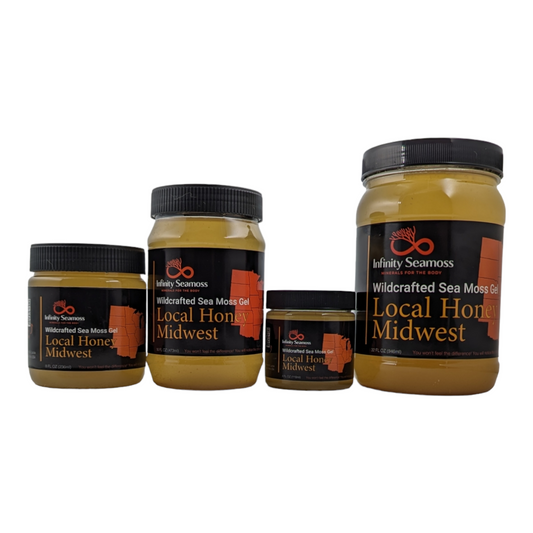
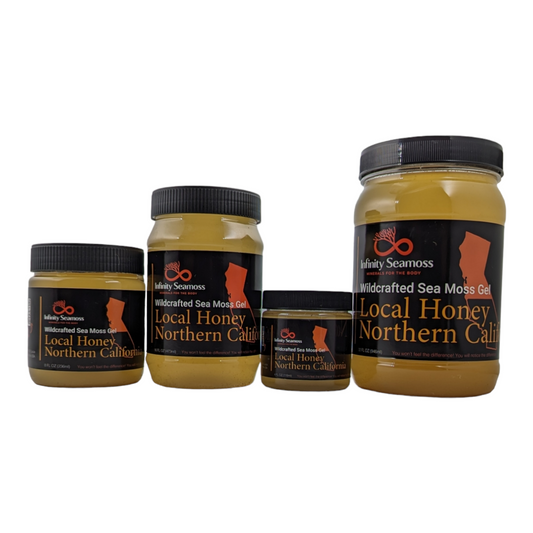
Then there's where it came from. We make this gel in eight versions, one per region, and the honey in each comes from hives there. The Midwest jar is alfalfa, basswood, clover, sunflower and goldenrod. The Northeast is alfalfa, berries, clover and goldenrod. The Southwest is a different landscape and tastes like one. You pick yours.
That's the honest meaning of local honey: not a health claim, a sourcing one. And when researchers pooled 18 feeding trials covering 1,105 people, raw single-flower honeys did best of the lot.
What about pollen and spring air
Straight answer, because it's why a lot of people come looking. Bees work flowers, and flower pollen is the heavy sticky kind that drops to the ground. What rides the spring air comes from trees and grasses bees have no reason to visit.
Goldenrod is the perfect example, and it's in two of our blends. It gets blamed every autumn and it's innocent. It's a bee flower. It just has the bad luck to bloom alongside ragweed, which is the wind-borne one actually doing it.
Wildcrafted St. Lucia sea moss, raw local honey, lemon, lime, spring water. Mild, floral and genuinely sweet. Made fresh to order in Atlanta.
Reasons not to take it
- Never give honey to a baby under one year old. Not raw, not cooked, not baked into anything, and that goes for all honey everywhere rather than just ours.
- Diabetes. This one is sweetened with real honey, so count it in your day like you would any sweetened food. A serving is small, and it still counts.
- A serious bee sting allergy. Skip this one and take a different blend.
- One to two tablespoons a day, the same as every other jar we make.
Get a jar
Sea moss gel with raw local honey, in whichever of the eight regions is yours, made fresh after you order and shipped from Atlanta.
A spoonful in the morning, or stirred into tea.
If it isn't what you wanted, tell us and we'll make it right.
References: PMID 36379223, 20228250, 368301. These statements have not been evaluated by the Food and Drug Administration. This product is not intended to diagnose, treat, cure, or prevent any disease.